Building an emergency fund comes down to four moves: pick a target, open a separate high-yield savings account to hold it, automate a transfer every payday, and shortcut the timeline with windfalls like tax refunds. Do those four things and the fund builds itself; the steps below turn them into a concrete plan you can start this week.

Step 1: Set your target (and a first milestone)
Your eventual target is three to six months of essential expenses: housing, utilities, food, insurance, transport, and minimum debt payments. Where you land in that range depends on income stability and dependents; use our emergency fund sizing guide to pick your number.
But your first milestone is smaller: $1,000. In Bankrate's 2026 Annual Emergency Savings Report, 53% of Americans said they lacked the savings to cover a $1,000 emergency, and about 24% had no emergency savings at all. A four-figure starter fund already changes how emergencies hit you: a dead battery becomes an errand instead of a debt.
Step 2: Open a separate account for it
The fund needs its own address. Held inside checking, it becomes invisible overflow and gets spent. The right home is a high-yield savings account at an insured bank:
- Insured. Up to $250,000 of FDIC or NCUA protection; see how deposit insurance works.
- Reachable, with friction. Transfers to checking take a day or two: fast enough for real emergencies, slow enough to deter impulse spending.
- Actually earning. Competitive high-yield rates run several times the FDIC national average of 0.38% (July 2026), so a five-figure fund pays for a bill or two each year just by sitting there.
The CFPB's emergency fund guidance makes the same core recommendation: an insured bank or credit union account is the safest place for emergency cash.
Step 3: Automate a payday transfer
Decide what you can consistently spare (even $25 per paycheck) and schedule an automatic transfer from checking to the fund dated the day after payday. Automation converts saving from a monthly decision into a default; the CFPB specifically flags automatic transfers and paycheck split-deposit (asking your employer to route part of direct deposit straight to savings) as strategies that work because they remove willpower from the equation.
Two rules make automation stick:
- Size it to survive tight months. A transfer you never pause beats a bigger one you cancel in March.
- Increase it on raises. Route half of any raise to the transfer before the new income becomes lifestyle.
Step 4: Shortcut with windfalls
Tax refunds, bonuses, rebates, side income, cash gifts: one-time money is the fastest fund-builder because it never entered your monthly budget. Committing even half of each windfall can cut months off the timeline. If you want to manufacture a windfall, a weekend of selling unused stuff or quick side work can fund the entire first milestone.
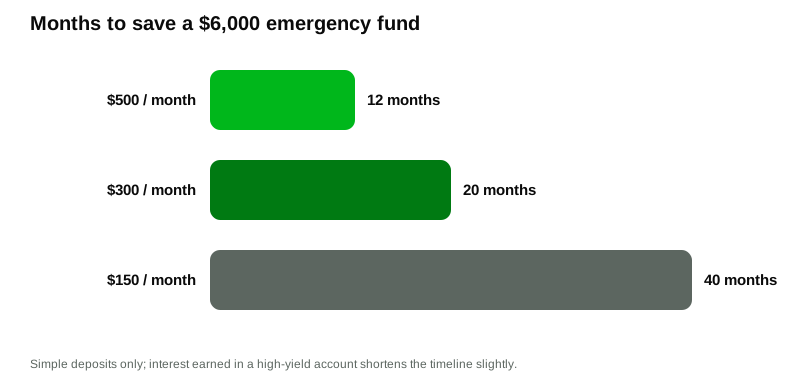
Here's what the timeline looks like at steady contribution levels:
Step 5: Define what counts as an emergency
The fund survives only if it has rules. A workable definition: unexpected, necessary, and time-sensitive. Think of a job loss, a medical bill, a car repair you need to get to work, a furnace in January. A sale on flights fails all three tests. Write your definition down when you open the account; future-you will look for loopholes.
Step 6: Refill after you use it, then stop
Using the fund is the system working, not failing. After an emergency, point the automatic transfer at rebuilding until you're back at target. And once you are at target, stop growing it: redirect the same transfer toward retirement accounts or other goals, because beyond your target, cash starts losing ground to inflation, the trade-off covered in how much to keep in a savings account.
Frequently Asked Questions
- How do I start an emergency fund from zero?
- Open a separate high-yield savings account, set an automatic transfer of whatever you can spare each payday (even $25) and aim for $1,000 as your first milestone. Add windfalls like tax refunds to accelerate, then build toward three to six months of essential expenses.
- How much emergency fund should I have?
- Three to six months of essential living expenses for most people. Lean toward three with a stable salary and a second household income; lean toward six or more with variable income, dependents, or a specialized job market. $1,000 is the right first milestone on the way there.
- Where should I keep my emergency fund?
- In a separate, federally insured high-yield savings account. It keeps the money reachable within a day or two, protected up to $250,000, earning a real rate, and out of sight of everyday spending. Avoid investing it; market dips and emergencies like to coincide.
- How long does it take to build an emergency fund?
- At $300 a month, a $6,000 fund takes about 20 months of steady deposits; $500 a month gets there in about a year. Windfalls like tax refunds can cut months off either path, and interest in a high-yield account trims a little more.
- Should I build an emergency fund or pay off debt first?
- Most people benefit from a small starter fund (around $1,000) first, so a surprise expense doesn't create new debt, then aggressive paydown of high-interest balances, then the full three-to-six-month fund. High-interest credit card debt compounds against you faster than savings compound for you.