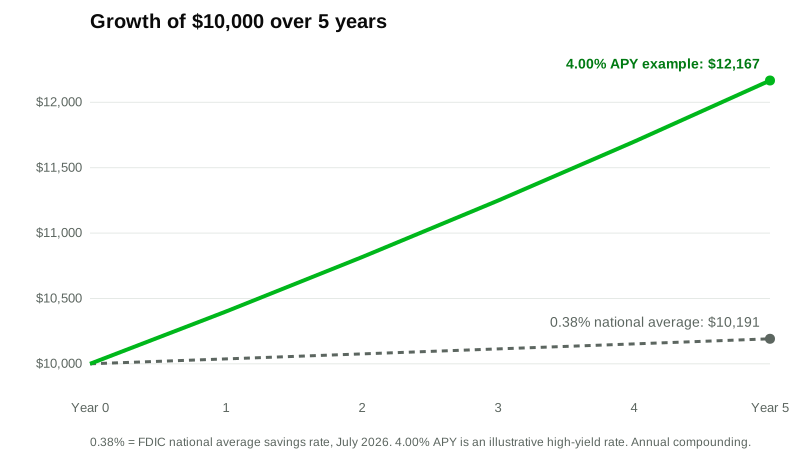
The real difference between a high-yield savings account and a traditional savings account is the interest rate, and almost nothing else. Both are federally insured deposit accounts that hold cash and pay interest; the high-yield version simply pays several times more. As of July 2026, the FDIC's national average savings rate is 0.38%, while competitive high-yield accounts routinely advertise around ten times that.

Why do high-yield savings accounts pay so much more?
Mostly because the banks offering them don't run branch networks. High-yield accounts are typically offered by online banks with far lower overhead, which compete for your deposits by paying more of their lending margin back to you as interest. Branch banks, meanwhile, know that most customers rarely move their savings, so they don't have to pay much to keep it. We break the business model down further in how high-yield savings accounts actually work.
The label itself isn't regulated; "high-yield" is marketing, not a legal category. What is regulated is the disclosure: under the Truth in Savings Act (Regulation DD, 12 CFR Part 1030), every bank must disclose an account's APY, so you can compare any two savings accounts on one standardized number. If you're not sure what APY measures, start with our APY vs. interest rate explainer.
What the difference looks like in dollars
Rates in the table are examples for illustration, using the FDIC national average for the traditional account.
| Feature | High-Yield (4.00% APY example) | Traditional (0.38% national avg.) | |
|---|---|---|---|
| Interest after 1 year | $400 | $38 | |
| Interest after 5 years | $2,167 | $192 | |
| FDIC insurance | Up to $250,000 | Up to $250,000 | |
| Typical access | Online/app, 1–3 day transfers | Branch, ATM, online | |
| Typical monthly fee | None | Varies; often waivable |
Rates as of July 20, 2026. Rates and terms are set by providers, change frequently, and may vary by state or balance, so always confirm details on the provider's site.
Is anything actually worse about high-yield accounts?
A few practical trade-offs, none of which touch safety:
- No branches. Deposits and support happen through an app, website, or phone. If you handle cash regularly, you'll want a checking account with ATM access alongside.
- Transfer lag. Moving money to an external checking account usually takes one to three business days.
- Variable rates. The APY can change at any time; high-yield rates move with the broader rate environment. (Traditional rates are variable too; there's just less room to fall.)
- Withdrawal caps at some banks. The Federal Reserve removed the federal six-per-month transfer limit in April 2020, but individual banks may still impose their own limits, so check the account terms.
Insurance is identical for both: up to $250,000 per depositor, per bank, per ownership category at FDIC-member institutions; the full detail is in our guide to whether online banks are safe.
Should you switch to a high-yield savings account?
If your savings currently earn a rate with a zero right after the decimal point, switching is one of the highest-return ten-minute tasks in personal finance. The move makes the most sense for money you're deliberately holding as cash: an emergency fund or savings for a goal within the next few years.
Opening one doesn't require closing your old accounts; many people keep a checking account at their existing bank and hold savings where it earns a real rate. When you're ready to compare specific accounts, see our current high-yield savings picks.
Frequently Asked Questions
- What is the difference between a high-yield savings account and a regular savings account?
- The interest rate. Both are insured deposit accounts that work the same way; a high-yield savings account simply pays a much higher APY (often several times the FDIC national average of 0.38% as of July 2026), usually because it's offered by a lower-overhead online bank.
- Is a high-yield savings account worth it for small balances?
- Yes, because switching costs nothing and most high-yield accounts have no minimums or fees. The dollar difference grows with your balance, but even modest savings earn more, and the account is ready as your balance grows.
- Are high-yield savings accounts FDIC-insured?
- Yes, when offered by an FDIC-member bank; coverage is up to $250,000 per depositor, per bank, per ownership category, identical to a traditional savings account. Verify any bank with the FDIC's BankFind tool.
- Can a high-yield savings account lose money?
- The balance can't decline from market movements, because it's a deposit, not an investment. The APY can fall over time, and fees (rare at online banks) could offset interest, but your principal is insured up to FDIC limits.